A fence is a great addition to your home. It protects your children and pets, while giving you privacy and defining your property’s boundary. However, as a fence ages there comes a time to make changes. Whether it’s a question of damage and replacement or just a question of what new look is best, there is another question to answer: whose fence is it – yours, your neighbour’s, or both?
Where is the boundary line?

Establishing the boundary line between the two properties is the first step to figuring out who owns the fence. When a fence is built directly on the property line, it’s called a boundary fence, and the fence belongs to both of you. Otherwise, the fence belongs to whatever side of the boundary line it’s on. If you are unsure where your property line is, hire a land surveyor to find the exact line. This small investment will help you make better decisions and avoid future disputes.
What side are the posts on?
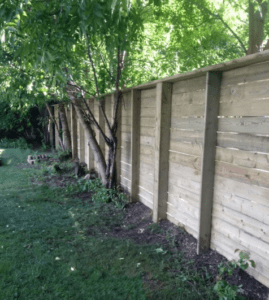
Fence construction can be a good indicator of who owns the fence. If the fence posts are on your property, it is likely your fence. Generally, a fence is built with the posts on the inside of the owner’s land with the finished side facing out, toward the street or neighbour. This improves the outward appearance of a home, and is generally a good marker for ownership.
Ultimately though, the property line is still important to know because there is no law governing post orientation. Regardless of which way the finished look faces, it may still be your neighbours’ fence, and if the fence is a boundary fence, what side the posts are on is irrelevant.
How do I approach my neighbours about fence repairs?
Whether it’s a fence repair or a new fence installation, simply talk to your neighbours first. If the fence is on the boundary line, and you want to share the costs, asking nicely is a good start.
Be open to your neighbours’ input if it will affect their property. Even if the fence is on your property line, giving a heads up about any upcoming fence work is good fence etiquette, and will help keep the neighbourhood peace.
What if my neighbours don’t want to change the fence?
If the existing fence sits on the property line (a boundary fence) or is on your neighbour’s property, you can build your own fence on your property to hide the old fence. However, if its a boundary fence and you just want to repair it, talk to your neighbours about waiving their rights to the fence. If they are willing to do so, make sure to get their agreement in writing to avoid future confusion, and to leave you free to make the repairs you want.
What if its the first fence on the property?
For a new, first-time fence discuss your plans with your neighbour. If you’re thinking fence, it’s likely they are too. Work together to find a fence option you both like and are willing to share the costs on. If your neighbours don’t want to pay for a new fence, building the fence just inside your side of the property gives you full ownership and the freedom to build whatever fence you want.
If you have questions or concerns about where you can build your fence, contact Wallace + Wallace or your local fence expert for help.
A beautiful fence is a great addition to your home and to your neighbourhood. Making sure your neighbours are part of the conversation and decision-making process will keep you both on good terms and satisfied with the final product.